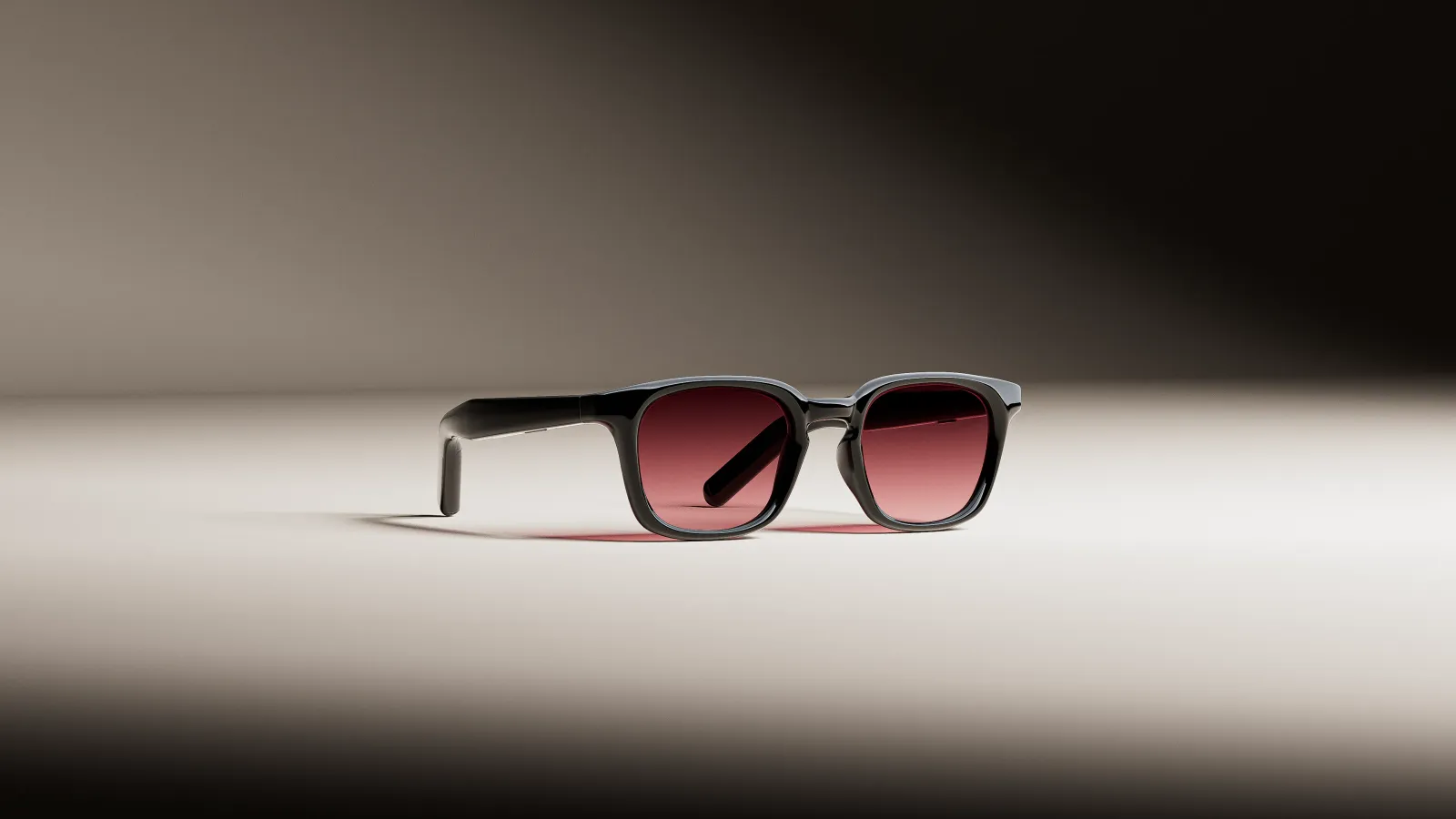
Viture’s Vonder Glasses Are Meant to Map Your Mind
No cameras? No problem. Viture’s first display-free smart glasses have bone-conduction microphones to privately record your daily musings.
以下正文同步自 Wired,版权归原站所有,已转换为易读排版。
His 10-year-old son played tennis. During tournaments, Jiang says he had a habit of shouting and criticizing his son’s mistakes as he played. He wanted to apply pressure to make him succeed—it was the way he’d been taught to raise kids, after all. It made sense.
But then, unprompted, his smart glasses sent him a message. The AI assistant in his company’s newest wearable had picked up on what he was doing, recognized that his behavior wasn’t helpful, and messaged him about what he should do differently. Stop shouting. Stop criticizing. Just be there, be present, and show that you support your son. That worked, Jiang says, and being called out like that has supposedly made him a better father and improved the relationship with his kid, all thanks to his yet-to-be-released Vonder AI glasses.
“I didn't know this until Vonder could find my pattern,” Jiang says. “This is not only a tool that can summarize your life, but also a tool that can help yourself to be a better person.”
Viture, a San Francisco-based company known for its plug-in virtual display glasses, announced its first pair of spectacles with no virtual display on Tuesday. The glasses instead look remarkably like normal glasses, but aim to map out your memories, ideas, and goals and plop them on a digital vision board, all without embedded cameras.
Now co-headquartered in California and Beijing, Viture has made glasses like the Viture One and the Viture Beast—wearable face computers that connect via USB-C cable to a device to project its screen right before your eyes. The company's products have primarily targeted gamers or anyone interested in big-screen entertainment. They work well for that purpose, but their chunky design means they fall short in comfort and fashion.
The new glasses are a bit of a pivot. They're called Vonder, you know, like “wonder” but with a V, and they don't have cameras. The glasses' arms feature mics and speakers that can play music, dictate map directions, and let the wearer make phone calls. Vonder also features a built-in AI assistant that combines the top large language models. It can trigger OpenAI’s ChatGPT, Anthropic’s Claude, Google’s Gemini, or even DeepSeek. Based on the task’s complexity, Vonder AI will source the answer from whichever model is the quickest and most economical.
They cost $299, can be fitted with prescriptions, come in a variety of frame shapes and colors, and can have clear, transition, or shaded sunglass lenses. Preorders launch September 28, and they’ll ship in November.
The company, like other smart-glass brands Xreal and Even Realities, is trying to make it very clear that it is not Meta, distancing itself from the ire Meta’s Ray-Bans have generated for their privacy-encroaching features. Viture says above all else, it wants its smart glasses to be a good pair of glasses. Ones that operate privately—the kind of frames people will willingly wear without worrying about being labeled a creep.
A blue indicator light turns on when the glasses are recording audio. It’s a small dot on the arms of the glasses, less central and less immediately noticeable than the indicator light on the Ray-Ban Meta glasses.
But Viture stands apart because most of the time, the glasses can collect data only when the wearer is speaking. You can trigger a meeting mode, and it will use on-board microphones to record the environment around you, but the rest of the time, they use bone-conduction sensors in the frames that can passively pick up the audio vibrations of the person wearing them all day long. (The Vonder glasses get about 16 hours of battery life.)
Once it collects information about your day and what you talk about, the assistant generates a personal memory graph that tracks your memories—things like what coffee shops you’ve been to, what sports you play, or whatever else you choose to confide in the glasses. As long as you’re talking about something, the glasses will pick that up and try to interpret the context to make a broader picture of what you’re up to. In the app, it displays all those connections in a big web graphic.
In a demo of how the glasses work, Jiang showed that the Vonder glasses he's wearing have kept tabs on his life over the past three months. He can ask it where to find coffee shops based on his caffeine preferences or have it help figure out why he's felt so stressed lately. The tech is also preemptive, pulling up topics he's been thinking about, like help with hiring decisions he's been mulling over and a plan for announcing his new smart glasses a day before Meta Connect. It also pulled up a dossier on me that it presented to him the morning he came to visit. It clearly knew who I was, what I write about, and had suggested some topics for him to prepare for.
“We just want to mimic the way your brain works,” Jiang says. “This is not a transcript or a summary. This is just how your memory organizes in your brain, even better than your memory.”
The Vonder glasses raise a question of how self-indulgent the information you’re collecting across your day is. It only records one perspective, after all—yours. That means you have to be comfortable sharing your thoughts with the glasses if you want them stored in the memory graph or have conversations with others all day.
I ask Jiang about this: how you make sure the information in your mind web considers other factors than your own perspective. Jiang says if he wants something to stick, he tends to repeat what someone else said.
“In a conversation, a human tends to repeat because a conversation is turn by turn—if you have a question, I follow up your question and then AI knows what the question is,” Jiang says, “Even though there's a missing part, it's not 50 percent missing. It's maybe only 10 percent or 15 percent.”
I ask what he’d do if we were arguing right now. If I’d felt one way and he another, and then he went back to his mind web and tried to revisit the conversation. Would it bias him if his own voice was only the information it was given? This is what prompts him to talk about his kid playing tennis. That the glasses had outright told him he was wrong about something.
“The problem right now is that AI has really, really powerful somatic knowledge, but the missing part is the human episodic memory there,” Jiang says. “In the past three months I’ve used these glasses, I feel my life has been changed or improved.”
正文由 FLUX 从来源站点 RSS 同步,内容未经改写;遇到排版缺失或需要图片、视频时请以原文为准。