Woman's brain worm infection confirmed after eggs grow tails in lab test
There is no single definitive test for these worms, but the tail is fairly convincing.
以下正文同步自 Ars Technica,版权归原站所有,已转换为易读排版。
Out of nowhere, a woman's right arm and leg started shaking uncontrollably. In the moments leading up to the experience, she seemed well; she had no headache, confusion, or weakness. But for about a minute, half of her body juddered.
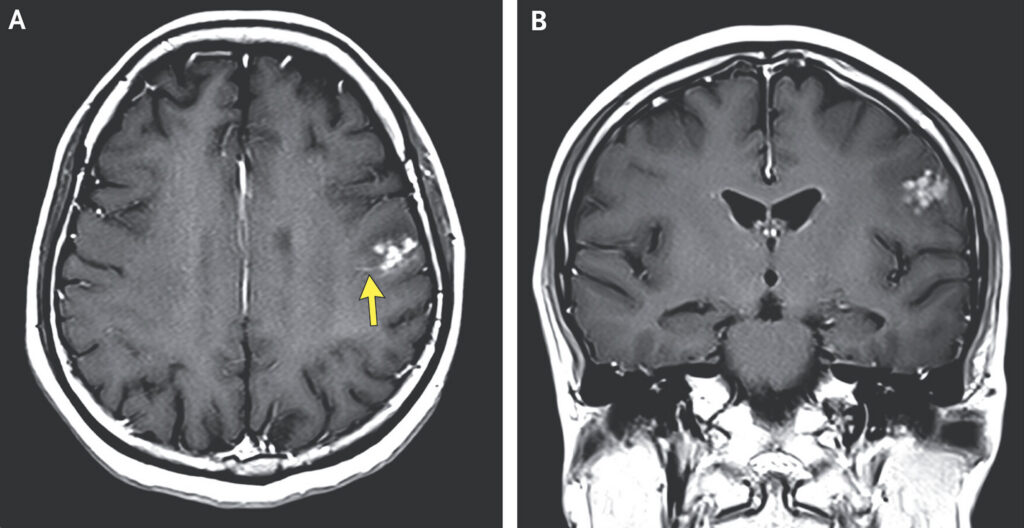
The woman, a rice farmer in the Philippines, headed to the emergency department. There, doctors gave her a physical exam and found nothing out of the ordinary. Then they took a look at her brain. Magnetic resonance imaging revealed a bright cluster of nodules surrounded by fluid in her left frontal lobe. The doctors had an immediate guess as to what they were: worm eggs.
An MRI of the woman's brain showing nodules.
Credit:
NEJM, 2026
In a case report published in the latest issue of the New England Journal of Medicine, doctors write that they suspected the woman had neuroschistosomiasis, an uncommon complication of an infection with a Schistosoma parasitic worm, aka a blood fluke. In the Philippines, the most common fluke is S. japonicum. It's also found in China and part of Indonesia; despite its name, it has been eliminated from Japan.
Read full article
Comments
正文由 FLUX 从来源站点 RSS 同步,内容未经改写;遇到排版缺失或需要图片、视频时请以原文为准。