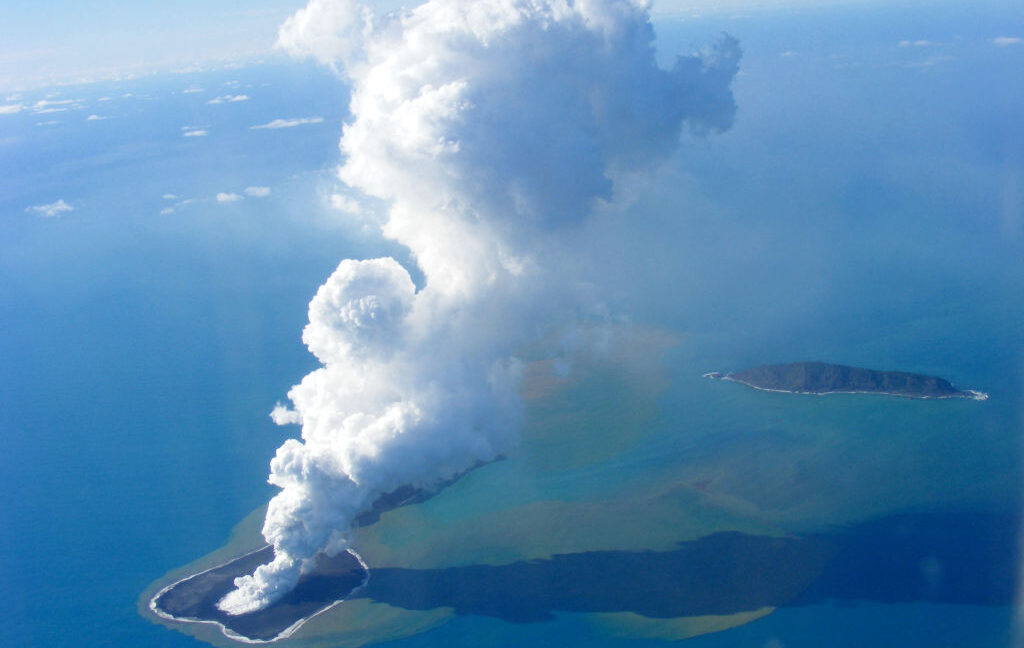
Small undersea volcanoes may unleash outsized tsunamis
Post-eruption imaging of the Hunga caldera gives new details of its collapse.
以下正文同步自 Ars Technica,版权归原站所有,已转换为易读排版。
Krakatau, a volcanic island in Indonesia, killed more than 30,000 people when it erupted in 1883. One might assume that volcanic debris posed the major threat, yet many of the victims died from a tsunami caused by the volcanic eruption instead.
Volcanoes at sea can pose hazards quite different from those on land, as their impact can vary depending on how the volcanic activity interacts with seawater. In the deep ocean, high water pressure can suppress explosive volcanic activity, making eruptions less destructive. But closer to the surface, the lower water pressure and the high temperatures of volcanic material can cause violent explosions. Yet scientists still do not fully understand the conditions under which volcanic activity can cause a tsunami.
To better understand these risks, an international team of researchers examined the 2022 Hunga eruption in Tonga, focusing on the rapid caldera collapse that may have amplified its powerful tsunami. Calderas form when the ground above a magma reservoir collapses as the magma drains away. Comparisons of seafloor topography before and after the eruption showed that a roughly four-kilometer-wide caldera sank by about a kilometer during the eruption.
Read full article
Comments
正文由 FLUX 从来源站点 RSS 同步,内容未经改写;遇到排版缺失或需要图片、视频时请以原文为准。