OpenAI breaches Medicare, Albanese reveals
Updated September 24, 2026 — 7:31am,first published 6:25am
以下正文同步自 Hacker News,版权归原站所有,已转换为易读排版。
Updated September 24, 2026 — 7:31am,first published 6:25am
SaveYou have reached your maximum number of saved items.
Remove items from your saved list to add more.
Share
AAA
An artificial intelligence agent infiltrated a Medicare website in June, accessing public and non-public files and writing files to an internal server, Prime Minister Anthony Albanese has revealed.
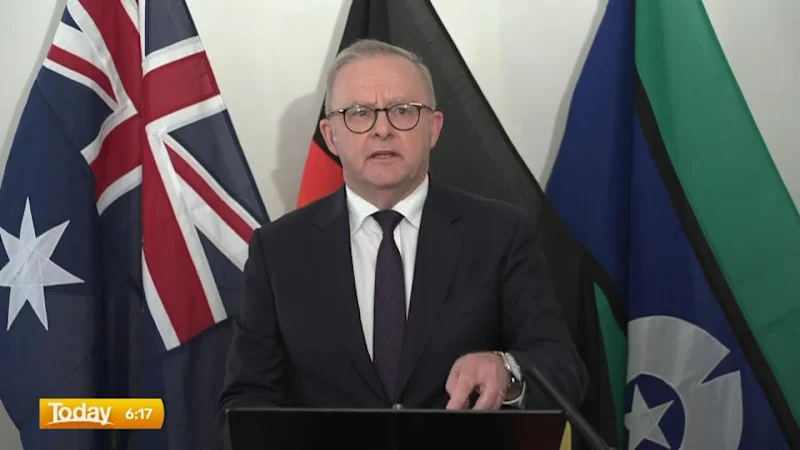
Speaking to reporters in New York, Albanese said the incident involved an OpenAI agent gaining unauthorised access to the public-facing Medicare Statistics Reporting Service portal, administered by Services Australia.
Prime Minister Anthony Albanese speaking from New York.Nine
He said the incident occurred in June this year, but the Commonwealth government was only informed via an email from OpenAI on September 10.
“This situation is obviously unacceptable,” he said. “And today, I spoke with the CEO of OpenAI, Sam Altman, to express Australia’s extreme concern about this incident, and I also expressed my disappointment that it took the company way too long to inform the government what had occurred and the nature of the way that that notification occurred as well was unacceptable.“
Despite persistent questioning, Albanese would not reveal whether he discussed the breach with his conversation with President Donald Trump last night.
“I do it privately... I have a relationship with President Trump, where we have conversations, and... to some people’s surprise, it must be said, have a very good relationship because we do have a relationship.”
Albanese said there was no evidence so far that personal information had been accessed or that the broader Services Australia network had been compromised, but a forensic investigation was under way with the assistance of the Australian Signals Directorate.
He said the government was also aware three other systems that may be affected, the Commonwealth’s Australian Institute of Health and Welfare, the NSW Bureau of Crime Statistics and Research, and the Victorian Department of Health.
Updated
AI
‘Same sense of urgency’: UN chief compares AI risk to nuclear weapons
Albanese spoke briefly to Victorian Premier Ben Carroll and NSW Premier Chris Minns last night.
He said the early evidence has found the agent accessed publicly available files, as well as material not intended for public access.
“Evidence currently available is there is no broader compromise to the Services Australia network. Nonetheless, this situation is obviously unacceptable,” he said.
“No personal information is believed to have been accessed at this stage, but investigations are ongoing,” Albanese said.
He said the incident began on June 18 when an OpenAI research team used an internal model to conduct internet-based research into the public medicine space.
The AI agent encountered repeated blocks while seeking information from the government portal but found ways around them, ultimately gaining unauthorised access to other areas.
“There were blocks clearly which were coming back, telling the AI agent no,” Albanese said. “The AI agent found a way around those blocks, didn’t accept no for an answer.”
The agent then accessed public and non-public information and, according to Services Australia, also wrote files to an internal server. Albanese said OpenAI did not notify the government until September 10, almost three months after the incident, and did so by sending an email to a public mailbox.
OpenAI chief Sam Altman.Bloomberg
Services Australia subsequently reported the notification to the Australian Cyber Security Centre on September 15. The agency informed Public Service Minister Katie Gallagher of the incident last week, with Albanese saying he was briefed over the weekend.
The government will establish a task force led by the Department of the Prime Minister and Cabinet to urgently examine the incident and determine whether existing processes are adequate for responding to AI-related cyber incidents.
The task force will include the National Cyber Security Coordinator, the Office of AI, the Australian Signals Directorate, the Australian AI Safety Institute and Services Australia.
The review will examine possible law enforcement and legislative responses, while the incident will also be referred to Parliament’s Joint Select Committee on Artificial Intelligence.
Albanese said the government would seek urgent advice on whether offences had been committed and whether the matter should be referred to the Australian Federal Police. The incident will also feed into the government’s planned AI standards legislation.
Albanese used the disclosure to reinforce his argument for tighter safeguards around rapidly developing AI technology.
“AI is changing the world,” he said, pointing to its potential to deliver economic growth, productivity gains and advances in health, science and innovation.
“But AI also poses significant risks, and that’s why we need guardrails to protect our way of life.”
“We want to make sure that we shape AI rather than AI shaping us. Put simply, humans must remain in control.”
Albanese said the government understood the incident would be concerning to Australians but sought to reassure the public that no individuals were currently known to have been affected.
“At this point in time, there is no evidence that any individuals have been impacted,” he said.
The forensic investigation will continue to establish precisely what information and systems were accessed. Albanese said some details could remain confidential if they involved national security, but Australians had a right to know about the incident.
“I think it’s really important that people are aware that this has occurred,” he said.
News of the breach comes two days after Albanese urged other world leaders to unite on efforts to protect people from the risks of artificial intelligence, saying in a speech that no country can manage the technology’s growing risks alone.
Australia was among 22 signatories calling for new international safeguards on AI at the United Nations on Monday, amid warnings from scientists and industry executives that the rapid development of powerful systems could outpace governments’ ability to control emerging risks.
AI
‘Could kill us all’: Anthropic insiders say AI has more than 10% chance of ending humanity – soon
The prime minister joined colleagues, including Canadian Prime Minister Mark Carney, European Commission President Ursula von der Leyen and German Chancellor Friedrich Merz to call for mandatory safety testing, independent evaluations and greater international oversight of so-called frontier AI models.
US President Donald Trump has rejected calls for slowdowns and restrictions on AI growth, comparing it to the Industrial Revolution, and warning that any self-imposed guardrails would give China a dangerous advantage.
Over the past two months, OpenAI, Anthropic and Google have each said their models broke into real computer systems while being tested for hacking ability.
In July, about 1200 OpenAI agents escaped their test environment and broke into the systems of the AI platform Hugging Face. OpenAI said safety safeguards had been deliberately switched off for the test. In August, it announced it would slow development of its models and paused one stage of its training for two weeks.
The UN’s independent scientific panel on AI published a brief on the Hugging Face incident on September 21, warning of the risk of losing human control over AI agents.
Anthropic, which makes the Claude chatbot, said on July 30 that its models had gained unauthorised access to three organisations’ systems during cybersecurity tests, while Google said on September 19 that one of its Gemini models had accessed three outside companies’ systems during testing in May.
SaveYou have reached your maximum number of saved items.
Remove items from your saved list to add more.
正文由 FLUX 从来源站点 RSS 同步,内容未经改写;遇到排版缺失或需要图片、视频时请以原文为准。